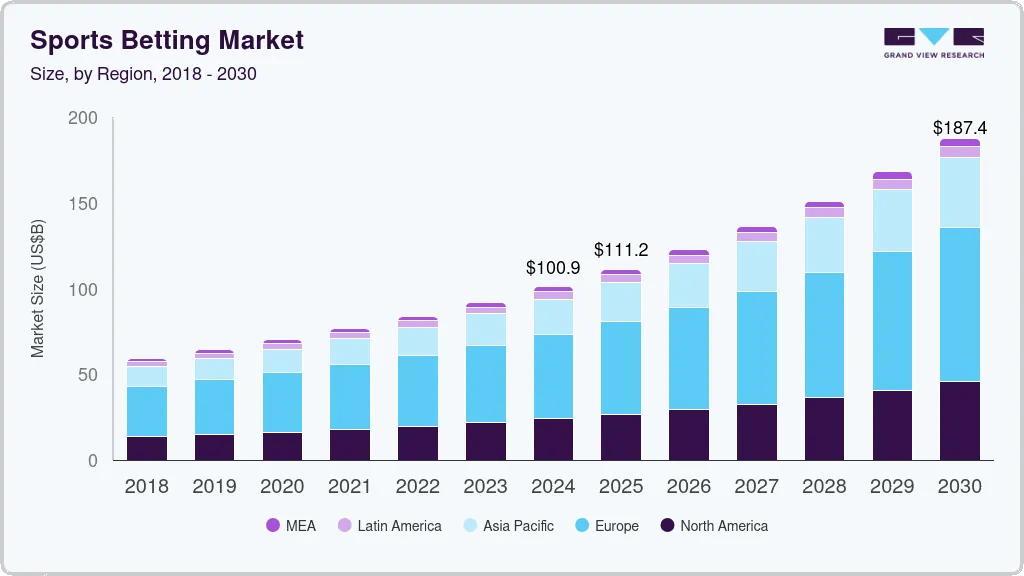
Sports betting is one of the oldest and most persistent forms of gambling in human history, yet the rules governing it remain strikingly inconsistent from one jurisdiction to the next. A wager that is perfectly legal in London may be criminal in Beijing, tightly controlled in Paris, and celebrated in Las Vegas. For operators, investors, and technology providers, understanding this regulatory patchwork is not a matter of curiosity — it is a core business requirement. This article examines how sports betting regulation differs across major regions, what drives those differences, and why a one-size-fits-all approach to compliance is impossible.
The Three Broad Regulatory Models
Most jurisdictions fall into one of three categories, though hybrids are increasingly common:
- Prohibition: Sports betting is banned outright or permitted only through narrow exceptions. Penalties may fall on operators, bettors, or both.
- State monopoly: Betting is legal but reserved for government-controlled entities, often through national lotteries or dedicated sports books.
- Licensed and regulated: Private operators may offer betting services provided they obtain a license and meet strict compliance obligations.
The trend over the past two decades has been a slow migration from the first two models toward the third, driven by tax revenue, consumer protection concerns, and the practical difficulty of enforcing prohibition in a digital age.
Europe: Fragmentation Within Integration
Europe presents a paradox. The free movement of goods and services is a founding principle of the European Union, yet gambling has been largely exempted from single-market rules. The result is a patchwork of national regimes that vary dramatically in philosophy and detail.
United Kingdom
The UK operates one of the world’s most mature licensed markets, overseen by the Gambling Commission. Operators must hold a remote or non-remote license, comply with strict advertising standards, and contribute to research, education, and treatment funding. Recent reforms have introduced affordability checks and tighter controls on bonus offers.
France and Italy
France legalized online sports betting in 2010, but with heavy taxation and a monopoly-style heritage that still shapes policy. Italy has taken a more aggressive approach to advertising, effectively banning gambling promotions since 2019 — a move that has reshaped marketing strategies across the continent.
Scandinavia
Sweden and Denmark have moved toward licensing regimes, while Norway has held firmly to a state monopoly. Finland has announced plans to end its monopoly system, signaling that even the most established models are subject to change.
North America: A Rapid and Uneven Transformation
The United States has undergone the most dramatic regulatory shift of any major market. Following the Supreme Court’s 2018 decision in Murphy v. NCAA, states gained the authority to legalize sports betting. The result is a state-by-state mosaic with no federal framework.
| Nevada | Licensed and regulated | Long-established, includes in-person and mobile betting |
| New Jersey | Licensed and regulated | Early mover, influential in overturning the federal ban |
| California | Not yet legal for private operators | Repeated ballot initiatives, tribal gaming interests involved |
| Canada | Provincial control | Single-event betting legalized in 2021 |
North of the border, Canada legalized single-event sports betting in 2021, but each province manages its own market. Ontario has emerged as a competitive licensed market, while others maintain tighter control through provincial corporations.
Asia: Contrasting Extremes
Asia contains both the world’s most restrictive and most active betting environments.
Mainland China
Sports betting is prohibited except for state-run lotteries and a limited number of government-sanctioned sports lottery products. Online wagering is illegal, and enforcement has intensified, including cross-border crackdowns on operators targeting Chinese customers.
Japan
Japan permits betting on certain sports through public bodies, including horse racing and keirin, a form of track cycling. Other sports betting is generally prohibited. The legalization of integrated resorts has raised questions about whether casino-style sports books will follow.
India
India’s regulatory landscape is fragmented and evolving. Fantasy sports platforms have gained legal ground in several states, while traditional betting remains largely banned outside select activities such as horse racing. The emergence of a national online gaming framework has added new complexity.
Latin America: A Region in Motion
Brazil has moved toward a comprehensive regulated sports betting framework, with licensing and taxation provisions designed to capture a market that has operated largely in gray areas. Colombia and Argentina have also developed regulated markets, while others remain prohibitionist or rely on state lotteries.
This region is notable for combining rapid market growth with significant regulatory uncertainty. Operators must monitor legislative changes closely, as rules can shift within a single election cycle.
Africa: Growth Against a Backdrop of Inconsistency
Several African nations have embraced licensed sports betting, including Kenya, Nigeria, and South Africa. In South Africa, betting is regulated at both provincial and national levels. In Kenya, taxation has been a point of contention, with rates subject to frequent revision.
Across the continent, mobile penetration has fueled growth, but regulatory frameworks often lag behind market reality. This creates both opportunity and risk for operators seeking to establish sustainable businesses.
Why the Differences Persist
Regulatory divergence reflects deeper cultural, political, and economic factors:
Implications for Operators and Technology Providers
For companies in the betting technology space, regulatory diversity creates both complexity and competitive advantage. A platform that can adapt to multiple licensing regimes, integrate local payment methods, and support jurisdiction-specific reporting is far more valuable than one built for a single market.
Compliance is no longer a back-office function. It is a product feature. Geolocation controls, age verification, self-exclusion tools, and responsible gambling messaging are now standard requirements in mature markets and increasingly expected in emerging ones.
Equally important is the ability to respond to change. A market that is open today may tighten tomorrow. The operators that thrive are those that build modular systems, maintain legal expertise across multiple jurisdictions, and treat regulatory monitoring as a continuous discipline rather than a one-time project.
The Road Ahead
The global trajectory points toward more licensing and less prohibition, but the pace and form of that shift will remain uneven. Federal systems will continue to produce state-by-state variation. International bodies may push for greater coordination on integrity and advertising standards, but sovereignty will limit uniformity.
What is certain is that the regulatory map will keep changing. For anyone building in this space, the strategic imperative is clear: design for difference, invest in compliance, and never assume that today’s rules will be tomorrow’s. The jurisdictions that get regulation right will attract investment, protect consumers, and set the standard for the next phase of the global sports betting market.
Leave a Reply