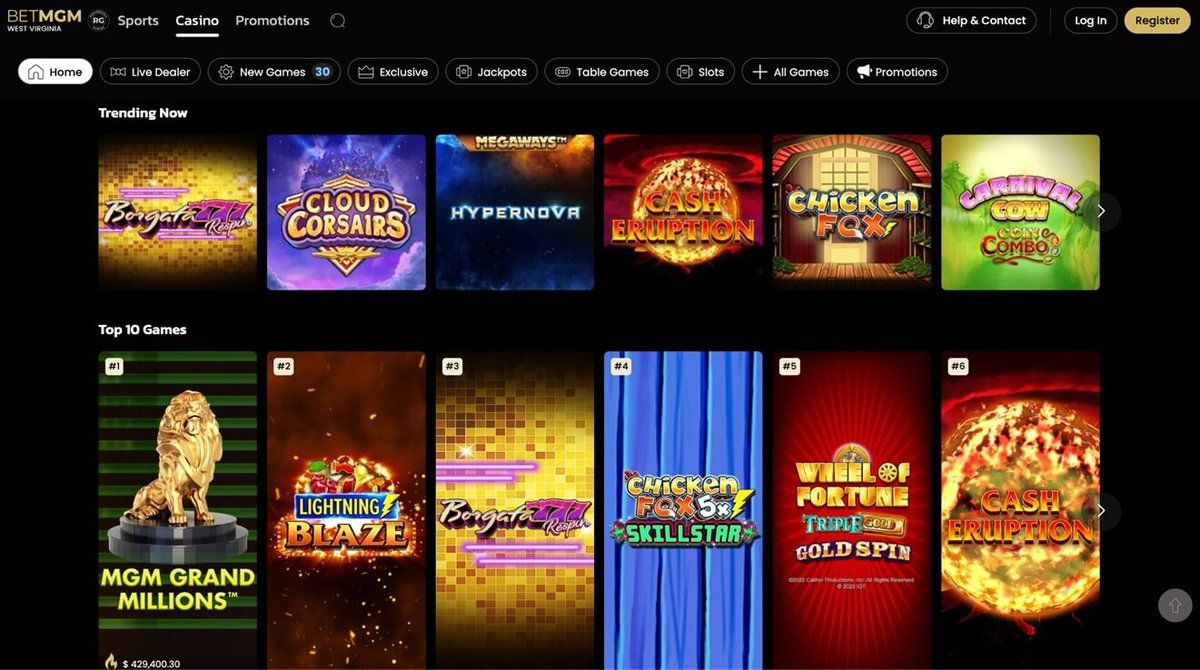
The online casino industry has evolved into a sophisticated digital ecosystem, powered by high-performance software, real-time random number generators (RNGs), and secure payment infrastructures. For technology professionals and curious players alike, understanding how these games function beneath the interface reveals a fascinating blend of mathematics, software engineering, and user experience design. This article breaks down the most popular online casino games, explaining their mechanics, underlying technology, and why they dominate the digital gambling landscape.
How Online Casino Games Work
Before diving into specific titles, it is essential to understand the technological backbone that powers every online casino game. Most modern platforms rely on a combination of Random Number Generators (RNGs), certified by independent auditing firms such as eCOGRA or iTech Labs, to ensure fair outcomes. These algorithms produce millions of random results per second, making it statistically impossible for players or operators to predict the next outcome.
In addition, live dealer games utilize real-time streaming protocols such as WebRTC and low-latency video encoding to connect players with physical studios. This hybrid model combines the convenience of digital play with the authenticity of a brick-and-mortar casino, all delivered through responsive front-end frameworks.
1. Online Slots
Online slots remain the undisputed king of the digital casino world, accounting for a significant majority of total gaming revenue. Their appeal lies in simplicity and variety, but the technology behind them is remarkably complex.
Core Mechanics
Each slot game operates on a set of virtual reels populated with symbols. When a player spins, the RNG instantly determines the outcome, and the software maps that result to a visual reel animation. Key technical parameters include:
- RTP (Return to Player): The theoretical percentage of wagered money returned to players over time, typically between 94% and 98%.
- Volatility: A measure of risk that determines how often and how much a slot pays out.
- Paylines: Predetermined patterns that must align to trigger a win, ranging from fixed lines to 243+ ways-to-win systems.
Types of Slots
2. Blackjack
Blackjack is a skill-based card game that has transitioned seamlessly into the online environment. Unlike slots, where outcomes are purely random, blackjack allows players to make strategic decisions that influence the house edge.
Gameplay Overview
The objective is to build a hand value closer to 21 than the dealer’s without exceeding it. Digital versions implement mathematically optimal dealer behavior, typically standing on 17 or higher. Players can choose from actions such as hit, stand, double down, split, or surrender, depending on the variant.
Common Variants
| Classic Blackjack | Standard rules, 3:2 payout | ~0.5% |
| European Blackjack | Dealer receives one card initially | ~0.6% |
| Atlantic City Blackjack | Player may surrender | ~0.4% |
| Live Dealer Blackjack | Real-time streaming with human dealer | Varies |
3. Roulette
Roulette is a game of pure chance defined by a spinning wheel and a numbered ball. Online versions use RNGs to simulate the physics of the wheel, while live dealer variants stream an actual physical wheel in real time.
Main Variations
- European Roulette: Features a single zero, resulting in a house edge of 2.7%.
- American Roulette: Includes both a zero and a double zero, raising the house edge to 5.26%.
- French Roulette: Offers unique betting rules like La Partage and En Prison, reducing the house edge to 1.35%.
From a technical standpoint, roulette is straightforward: players place bets on a digital table, and the RNG generates a winning number. The software then calculates payouts based on the betting layout.
4. Poker
Online poker is distinct from other casino games because it is player-versus-player rather than player-versus-house. Platforms like Texas Hold’em, Omaha, and Seven-Card Stud dominate the landscape.
Technical Considerations
Poker platforms require robust server architecture to handle real-time multiplayer action, hand history tracking, and anti-collusion algorithms. Security measures such as SHA-256 hashing and provably fair systems are often implemented to verify shuffle integrity.
Popular Poker Formats
5. Live Dealer Games
Live dealer games represent the convergence of streaming technology and casino gaming. Studios equipped with multiple cameras, RFID-enabled tables, and optical character recognition (OCR) systems broadcast real-time action to players worldwide.
Latency is minimized using edge computing and content delivery networks (CDNs), ensuring that players in different regions experience near-instantaneous interaction. Popular live games include Live Blackjack, Live Roulette, Live Baccarat, and game show hybrids like Crazy Time and Dream Catcher.
6. Baccarat
Baccarat is a card game favored for its straightforward rules and low house edge. Players bet on either the Player hand, the Banker hand, or a Tie. The Banker bet carries the lowest house edge at approximately 1.06%, making it one of the most statistically favorable wagers in the casino ecosystem.
Online baccarat variants include Punto Banco, Chemin de Fer, and Baccarat Banque, each with slight rule modifications that affect strategy and payout structure.
Conclusion
The most popular online casino games succeed because they balance engaging mechanics with certified fairness and seamless digital delivery. Whether it is the algorithmic complexity of progressive slots, the strategic depth of blackjack and poker, or the immersive realism of live dealer streams, each game category leverages technology to replicate and often enhance the traditional casino experience. For developers and players alike, understanding these mechanics provides a clearer view of an industry driven by precision, security, and continuous innovation.
Leave a Reply