In the rapidly evolving world of sports betting, data literacy has become the single most valuable skill a bettor can possess. Whether you are analyzing algorithmic trading models for horse racing or simply comparing moneylines for a weekend football game, the ability to read and interpret betting odds is the foundation upon which profitable decisions are built. This guide will break down the mechanics of odds formats, explain how to calculate implied probability, and demonstrate the critical process of line shopping to ensure you are always getting the best value for your wager.
Understanding the Three Primary Odds Formats
Bookmakers around the world display odds in different formats, and a failure to understand the conversion between them can lead to costly miscalculations. The three dominant formats are decimal, fractional, and American. While they express the same mathematical relationships, they cater to different regional preferences and betting cultures.
Decimal Odds (European Format)
Decimal odds represent the total return for every unit staked. They are the simplest to understand because they include your original stake in the calculation. For example, if you see odds of 2.50, a $10 bet would return $25 ($10 stake + $15 profit). The formula is straightforward: Potential Return = Stake × Decimal Odds.
Fractional Odds (UK Format)
Fractional odds, such as 3/1 or 5/2, indicate the profit relative to the stake. If the odds are 3/1 (read as “three to one”), you will profit $3 for every $1 you wager. The fraction does not include the return of your stake. To convert fractional odds to decimal, simply divide the numerator by the denominator and add one: (3 ÷ 1) + 1 = 4.00 in decimal format.
American Odds (Moneyline Format)
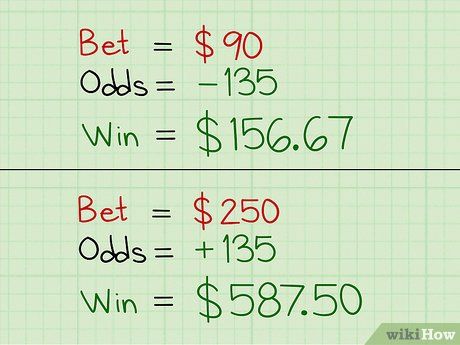
American odds use a plus (+) or minus (-) sign to indicate the underdog or favorite. A negative number (e.g., -150) tells you how much you must stake to win $100. A positive number (e.g., +200) tells you how much profit you will make on a $100 stake. This format is standard in the United States and is particularly common in major league sports like the NFL and NBA.
Calculating Implied Probability: The Key to Comparison
Odds are not just payout multipliers; they are a reflection of the bookmaker’s assessment of the likelihood of an event. By converting odds into implied probability, you can determine whether a bet offers value. The formula varies slightly by format, but the output is always a percentage.
| Decimal | 2.50 | (1 / Decimal Odds) × 100 | 40.00% |
| Fractional | 3/1 | (Denominator / (Numerator + Denominator)) × 100 | 25.00% |
| American (Negative) | -150 | (|Negative Odds| / (|Negative Odds| + 100)) × 100 | 60.00% |
| American (Positive) | +200 | (100 / (Positive Odds + 100)) × 100 | 33.33% |
When you calculate implied probability, you are essentially reverse-engineering the bookmaker’s line. If your own research suggests an outcome has a 50% chance of occurring, but the odds imply only a 40% chance, you have found a positive expected value (+EV) bet. This is the cornerstone of professional betting.
The Critical Practice of Line Shopping
Line shopping is the act of comparing odds for the same market across multiple sportsbooks to find the highest possible payout. Because bookmakers operate independently and cater to different customer bases, odds can vary significantly. A difference of just 0.1 in decimal odds may seem negligible, but over hundreds of bets, it dramatically impacts your long-term ROI.
Consider a scenario where you are betting on an underdog. One book might offer +180, while another offers +210. On a $100 stake, that is a $30 difference in profit. Over 100 bets, that is $3,000 in additional revenue simply by using a comparison tool or checking multiple apps before placing a wager.
- Identify Your Markets: Focus on the specific leagues and bet types you know best.
- Open Accounts at Multiple Books: To compare lines, you need access to at least three to five reputable sportsbooks.
- Use Odds Comparison Tools: Aggregators and APIs can scan dozens of books in real time, highlighting the best available price.
- Monitor Line Movement: Odds shift based on injury news, weather, and betting volume. A line that opens at -110 may move to -130, signaling sharp money.
Decoding the Vigorish (The Bookmaker’s Margin)
No discussion of odds comparison is complete without addressing the vigorish, or “vig.” This is the commission the bookmaker charges for accepting your bet. When you sum the implied probabilities of both sides of a two-way market, the total will always exceed 100%. The excess is the vig.
For example, a standard NFL point spread might be -110 on both sides. The implied probability of each side is 52.38%. Adding them together gives 104.76%, meaning the bookmaker’s margin is 4.76%. When comparing odds, always look for markets with lower vig, as this reduces the house edge and increases your potential profitability.
Steps to Compare Odds Effectively
Conclusion
Reading and comparing betting odds is not a matter of intuition; it is a discipline rooted in mathematics and market awareness. By mastering the conversion between formats, calculating implied probability, and consistently shopping for the best lines, you transition from a casual bettor to a strategic operator. In the tech-driven sports betting landscape, the edge belongs to those who treat every wager as a data-driven decision rather than a gamble.
Leave a Reply